
Matheo Boison, Institut Agro, Bragato Research Institute
Vineyard, Sheep & Carbon
Climate change is one of the most significant long-term challenges facing the wine industry. To mitigate the effects of climate change, New Zealand has committed to reaching net zero emissions by 2050. From the vineyard perspective, reducing the use of inputs and fuel is the most practical way to lower the direct carbon footprint. Fortunately, New Zealand Winegrowers’ Roadmap to Net Zero sets an industry-wide objective to cut fuel consumption by 15% and minimise input use as much as possible without affecting productivity.
With over 24 million sheep across New Zealand in 2023 and with more than 42,500 hectares of vineyards, the integration of sheep in vineyards has been, for a long time, a common practice. But because of their appetite for grapes, sheep grazing has been mainly restricted to winter, when vines are dormant.
Several studies have reported benefits from sheep grazing in vineyards, including fuel savings and lower labour requirements. But, as livestock are emitters of methane, integrating them into a vineyard system would require accounting for their methane emissions in a vineyard’s carbon footprint.
Therefore, this study aimed to assess whether permanent sheep integration in vineyards is a cost-neutral way for growers to reduce their emissions in vineyards, as a tool to help them achieve net zero.
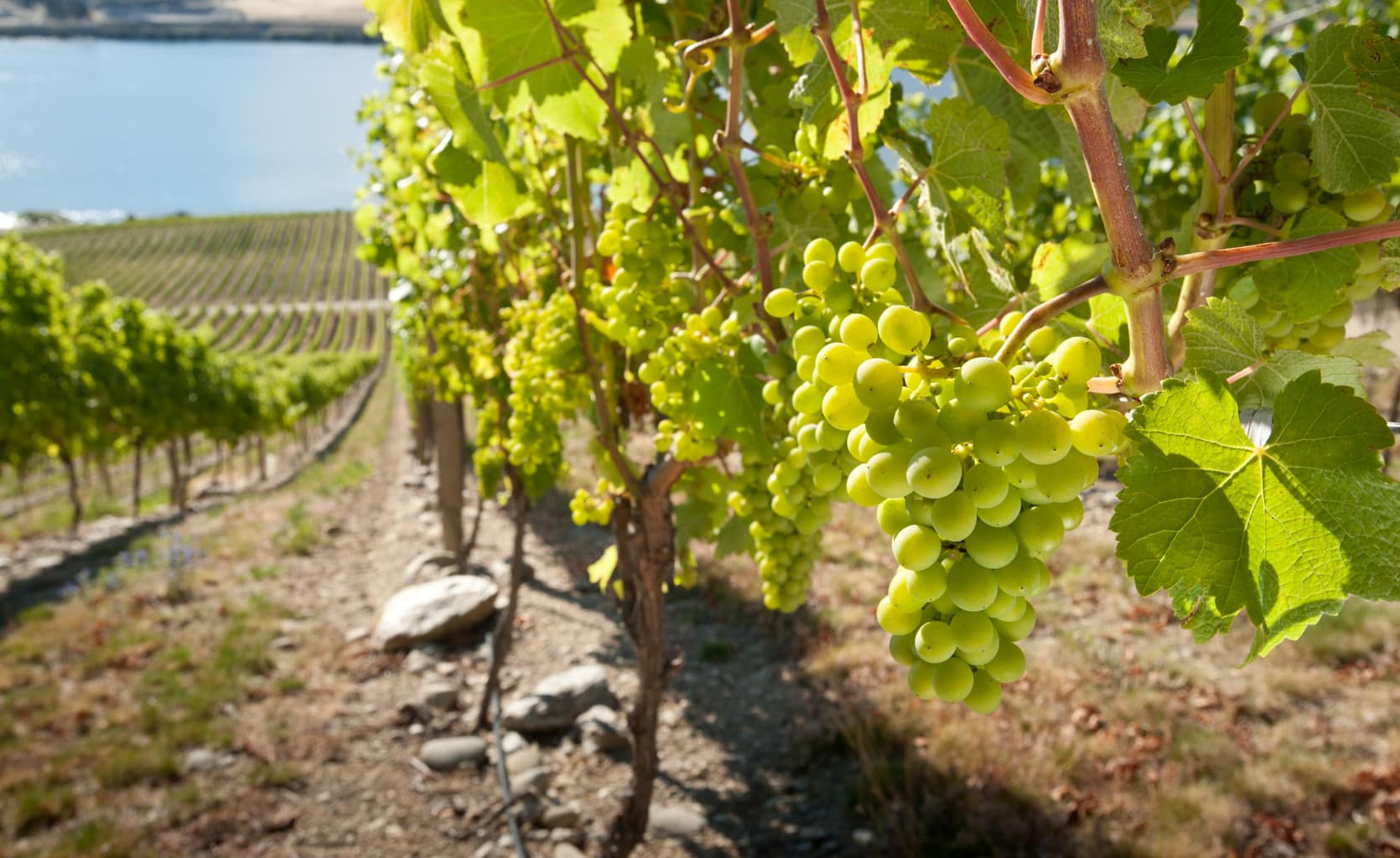
Thanks to collaboration between Bragato Research Institute, Lincoln University, and Institut Agro in France, this study compared the High Wire (HW) trellising system at Greystone Wines in Waipara to a local conventional vertical shoot positioning (VSP) vineyard. Greystone’s HW system allows year-round grazing, unlike VSP, which grazes sheep only in winter (Figure 1). On the assumption that the farming method significantly impacts the modelled outcomes, both HW and VSP systems were evaluated in an organic and a conventional farming model.
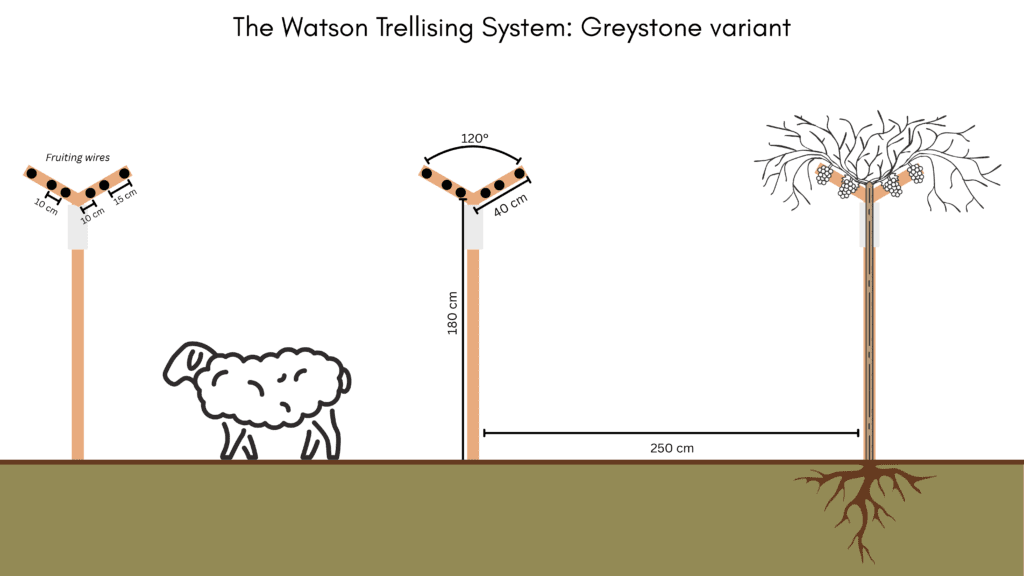
Figure 1: Watson Trellising System, row view
Designing a new framework for a new tool
Assessing the carbon footprint at the vineyard plot scale is challenging. A new Excel tool was developed, using studies and existing models, incorporating the most relevant data from New Zealand, where possible.
Following the Roadmap to Net Zero framework for vineyards, emissions from fertilisers, spraying products and fuel use were included in calculations. To account for the sheep integration and their emissions, biogenic methane from sheep grazing was considered.
All calculations were based on inputs that were collected by interviewing vineyard managers on tractor passes, spray diaries, and working hours.
Using that data and the financial budget manual from Lincoln University, a financial assessment evaluated the impact of the trellising change on overall financial performance.
Expected changes (inputs consumption, worked hours, etc.) when switching from VSP to HW were quantified yearly and per hectare, to allow for easy comparison. This partial analysis assumed that the compared vineyards were in the same working vineyard. This eliminated the need to quantify the tractor’s manufacturing carbon footprint or costs, as well as other tools, since they are similar across systems. Additionally, carbon and costs associated with the transportation of inputs and frost protection were not accounted for.
Detailed methodology can be found in the master’s thesis can be found in the NZW Research Library online (login required).
Photo: Richard Briggs
Mitigating emissions while increasing productivity
The study found that the integration of sheep year-round reduced carbon in two areas. Firstly, the integration of sheep resulted in the complete removal of herbicides. The study found that this translates into a reduction of 57% of the agrichemical products’ carbon footprint compared to conventional farming.
Secondly, due to the nature of the HW trellising, many tractor operations are no longer needed, such as leaf removal, trimming, bud-rubbing or pre-pruning. Sheep manage the ground cover, removing the requirement for sward management. Additionally, they will always look for something tastier than grass, which includes vine suckers. All these reductions in the needed mechanical operations will reduce fuel consumption, which will drop by 40% and 65% under high-wire for the organic and conventional farming systems, respectively.
However, as the beasts digest the grass, they emit methane, which is a very impactful greenhouse gas. Switching from winter sheep grazing to year-round will multiply by 5 times the methane carbon impact, which more than doubles the carbon footprint of the HW plot.
On the other hand, over the 2024-25 season, the yield from the HW was 42% higher than the VSP. This increased yield will need further verification, as this is for only one year. Added to that is the productivity of the sheep, through meat (99%) and wool (1%), which brings the increase in revenues to 108% and 76% when converting from VSP to HW for organic and conventional farming, respectively.
Regarding the expenses, the cost of conversion to High Wire in the organic and conventional farming systems resulted in an increase of 23% and 49%, respectively. The increase is due to wages associated with increased manual labour, which is a consequence of the HW trellising, as the mechanical harvest is no longer possible, and more time is required to manage the herd. The decreased consumption of fuel and agrichemical products was directly linked to a reduction in expenses, but it was not enough to compensate for the increased wages expenses.
By integrating sheep year-round through the HW trellising system, overall agricultural productivity per hectare increases by 76% under conventional and 108% under organic management. In terms of greenhouse gas emissions, the carbon footprint of HW with sheep integration reaches approximately 2.5 t of CO2e/ha/year. For comparison, a vineyard-only system averages about 0.75 t of CO2e/ha/year, while a sheep-only system reaches around 3.6 t of CO2e/ha/year.
Therefore, the integrated HW system emits roughly 43% less than the footprint of the two specialised systems when combined. This demonstrates that HW trellising represents an optimisation pathway, as it increases productivity while mitigating emissions.
There are also additional benefits to implementing sheep grazing all year-round. Reduced soil compaction by fewer tractor passes, improved soil health by sheep dung, enhanced biodiversity by a permanent grass cover with a no-till system or even a marketing advantage to highlight this regenerative practice.
Conclusion
The integration of sheep year-round with a HW canopy system allows vineyards to halve their fuel use while replacing herbicides in conventional farming. On the local scale, this integration supports the optimisation of productivity while mitigating emissions and preventing further land conversion to agriculture, which is in line with national guidelines on climate change and productivity.
If the HW system, along with permanent sheep grazing, were to be implemented everywhere in New Zealand, based on the assumptions and calculations made in this study, NZW’s Roadmap to Net Zero goal would be achieved and even exceeded.
It is also not all about carbon or financials, as many different additional benefits can be expected from integrating sheep year-round, implementing a non-tilling system, and ending the use of herbicides. Biodiversity, and through it ecosystemic services, is already a priority of New Zealand for tourism and environment, but could become a more prominent one for the agricultural industry.
Research on topics supporting industries to achieve significant emissions reductions and achieve Net Zero, such as this one, is an important contribution to combating climate change. More research is required in this area, including across other industries, so that effective and widespread emissions reduction can be achieved.
About the project
This project was part of an internship for a French Agronomical engineering diploma in viticulture.
The supervising team was constituted of Seth Laurenson (BRI), Amber Parker (LU), Aurelie Metay (IA), Anita Wreford (LU) and Pablo Gregorini (LU). Extended thanks to the Greystone team, Liam Burgess & Dom Maxwell, as well as Nick Gill from the food farm, and Alvaro Romera (BSI) for their help.
This 6-month project was funded by BRI and by the French State aid managed by the French National Research Agency, by the France 2030 program.







3 Comments