
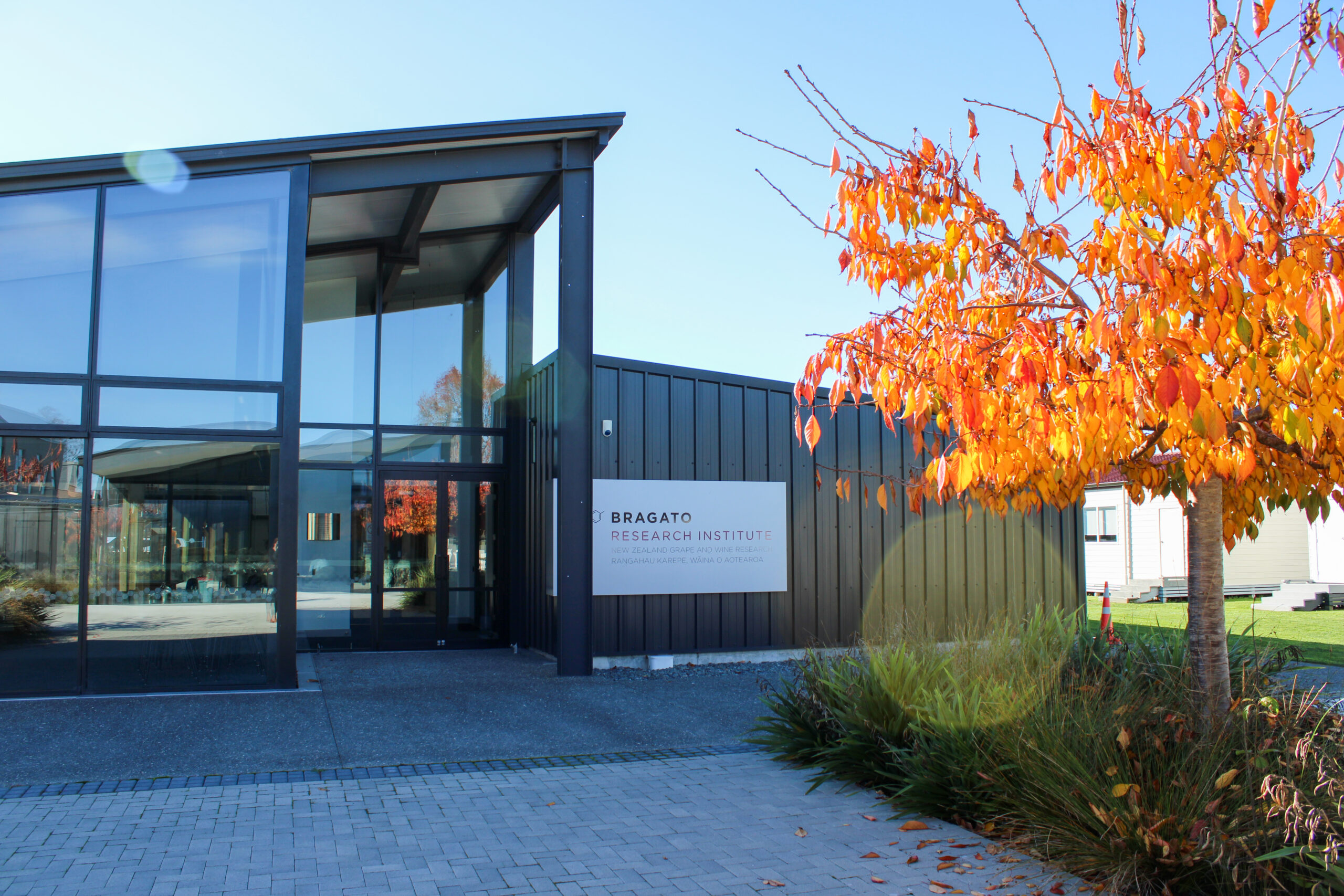
In March 2026, Bragato Research Institute opened its contestable funding round, inviting researchers and industry partners to submit proposals that will deliver meaningful benefits to the New Zealand wine industry. This year, we sought projects aligned with our Research Strategy that could be completed in a one- to two-year timeframe, and are likely to address challenges facing the industry in the short term.
Thank you to everyone who applied in this round. There were over 30 applications in this funding round, and the amount requested exceeded the funds available.
We are delighted to announce the four projects approved by the BRI Board for funding this year.
Powdery mildew spore trapping as a decision support tool for early season fungicide applications
Lead researcher: Karen Peterson, Thoughtful Viticulture
Powdery mildew is an ongoing issue for grape growers. Despite global research on the pathogen, New Zealand grape growers lack accessible decision support tools to optimise their spray programmes. This can lead to unnecessary spray rounds, increasing operational costs, emissions, and the potential risk of off-target chemical exposure and soil compaction.
This study aims to test weather and spore-based assessments as a decision support tool for Marlborough vineyards, and whether the total number of sprays can be reduced by only spraying when pathogen spores and permissive weather conditions are detected in the block.
Low carbon and environmental impact export packaging pathways for New Zealand wine
Lead researchers: Kate Meyer and Alice Oswald, Planetary Accounting Network
Packaging and distribution are significant contributors to New Zealand wine’s environmental footprint, given the distance from New Zealand wine producers to their key export markets. Using the Planetary Accounting framework, this project will compare packaging options such as standard glass, lightweight glass, cans, bag-in-box, and bulk shipping with packaging at the destination. The work will consider environmental impacts, cost, logistics, quality risk, and market suitability across key export regions.
The project aims to give wineries information to help them make evidence-based packaging decisions that reduce emissions and environmental impact while supporting commercial viability and New Zealand wine’s premium position in global markets. It will also identify future research priorities for industry-wide sustainability and innovation.
AI-driven protein design to address winemaking challenges
Lead researcher: Wayne Patrick, Victoria University of Wellington
Botrytis cinerea is a common fungal disease of grapevines, which can produce laccase enzymes that oxidise flavour and aroma compounds, turning wine brown and making it taste bad. This project, led by Victoria University of Wellington, harnesses AI-driven protein design to develop small proteins that bind specifically to laccases and shut them down.
It also seeks to identify naturally occurring enzymes that influence the flavour and aroma of no- and low-alcohol wines, then redesign them to perform effectively under fermentation conditions. This will provide winemakers with new tools to craft high-quality no/lo products.
Alternate strategies for GLRaV3 management
Lead researcher: Ellie Bradley, Bragato Research Institute
GLRaV3 is a persistent problem for the New Zealand wine industry because it reduces yield, delays ripening, and lowers fruit quality. It remains difficult to manage because infected vines cannot be cured. However, international research has shown that RNA molecules can be used to dramatically reduce GLRaV3 levels in infected vines in the field.
This project will explore whether RNA technology is effective for treating virus-infected grapevines in New Zealand conditions. It will assess whether early versions of RNA-based sprays can improve the health of symptomatic vines and evaluate the potential of alternative formulations developed in New Zealand.
Through this process, BRI aims to support high-quality, impactful research that strengthens viticulture and winemaking capability across the sector. If you have any queries about the contestable funding process, please email info@bri.co.nz.