



Pinot Noir is known to be prone to mutation, allowing the production of numerous Pinot Noir clones. Since there are many clones available, winegrowers don’t have objective knowledge based on New Zealand conditions about which clones are best suited to their site or style of winemaking. Bragato Research Institute (BRI) collaborated with Riversun Nurseries and Otago Polytechnic to analyse 12 Pinot Noir clones grown at the same site in Central Otago. This trial aims to give growers and winemakers data about each clone so they can make informed planting or replanting decisions for their specific site or wine style.

Otago Polytechnic and Riversun Nurseries planted a block on Bannockburn Road, Central Otago, in late 2017. The 12 Pinot Noir clones (Figure 1) were grown in the same soil conditions and on rootstock 3309. After several years of establishment, vineyard data was collected for seasons 2022-2024.
In 2024, the first season of winemaking was conducted at the BRI Research Winery. Twelve separate
microvins were conducted in the winery’s custom 17-litre tanks. Each wine was processed under the same conditions right through to bottling, and a variety of fermentation data, finished wine analysis and sensory scores were collected.
Twenty-four vines from each clone were planted in a randomised plot design. Data was collected throughout the season for various measurement parameters, including canopy density, bunch size, berry weight, harvest yield, and ripening. The trial was harvested on 31 March 2024 and 25kg of each clone was delivered to BRI in Marlborough (Image 1).
Each clone had bunch and berry weight assessed, then was crushed and destemmed and 16kg of fruit per clone fermented at 25C after a five-day cold maceration period. Ferments were punched down daily and a drop in brix was measured daily. Data was collected on maturity parameters, fermentation kinetics, finished wine parameters, colour, phenolics, and volatile aroma chemistry.
Once the wines were finished, 10 winemakers with experience in making Pinot Noir wines assessed the wines blind and rated them on 22 attributes associated with Pinot Noir. This data was collated and statistically analysed.
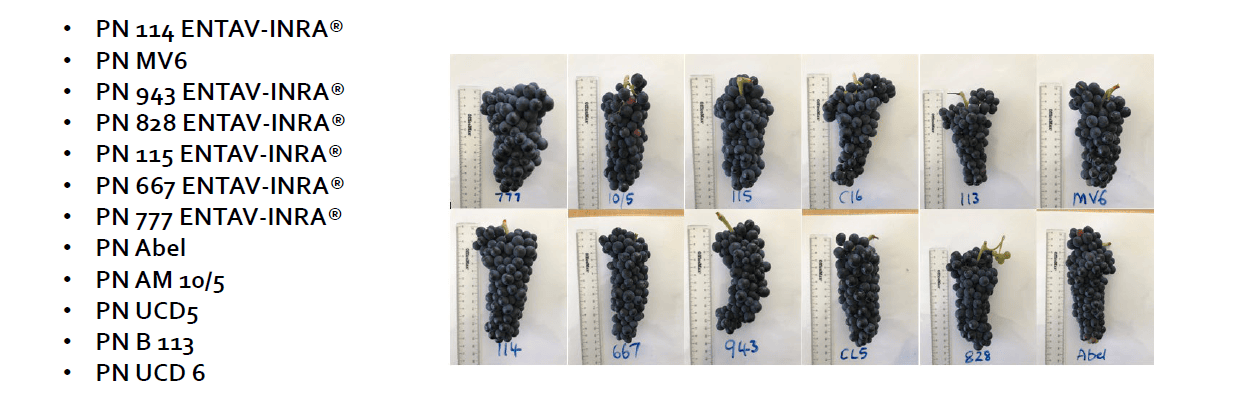
The 12 clones varied significantly from each other regarding average bunch weight, with Clone Abel having the largest bunches and Clone 943 the smallest. This correlated to ripeness, with Abel having the lowest brix at harvest and Clone 943 the second ripest. Abel had the highest malic acid content and Clone 943 the lowest.
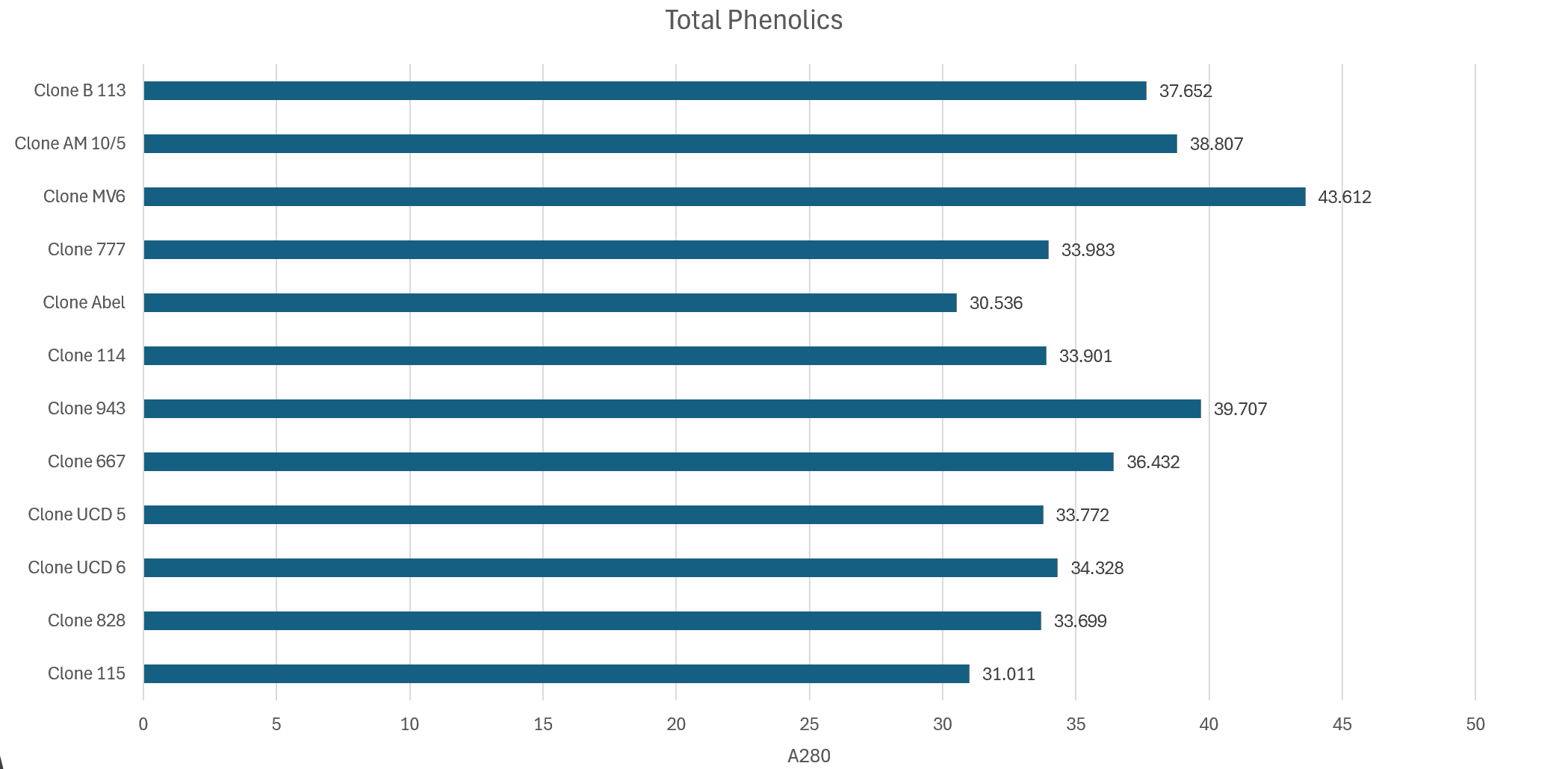
Colour-wise, the results mirrored the above, with Abel one of the clones with a lower colour intensity and Clone 943 having the deepest intensity. Clone MV6, known to have thicker skins than other Pinot Noir clones, had the highest phenolic reading at 280nm (Figure 2). The clone with the lowest phenolic level was Abel, but Clone UCD 6 was perceived to have significantly lower levels of phenolics by the expert winemaker panel.
The expert wine panel found limited significant differences between the 12 clones, but Clone 943 rated significantly higher in colour intensity than other clones and it also rated significantly higher in overall complexity.
When picked on the same date, the clones showed significant variation in bunch weight, phenological ripeness, colour and phenolic level, demonstrating the variation of different Pinot Noir clones’ performance in New Zealand. Data collection will continue over the coming seasons to build a picture of how each clone performs over different seasonal weather conditions. Although this trial is conducted in Central Otago, the data collected will be useful for decision making by growers and winemakers throughout New Zealand.
This project was funded by Bragato Research Institute, in conjunction with Riversun Nursery and Otago Polytechnic, and aimed to improve understanding of Pinot Noir planting material available within New Zealand.