



Rootstock (3309C)
Pinot noir clone (Abel)
Training system (VSP)
Pruning system (2-cane mostly)
Vine age (partially)
GTD and virus (visually)
A mix of “Icon” (single-vineyard, high-value wine) and “Affordable” (larger volume varietal blend)
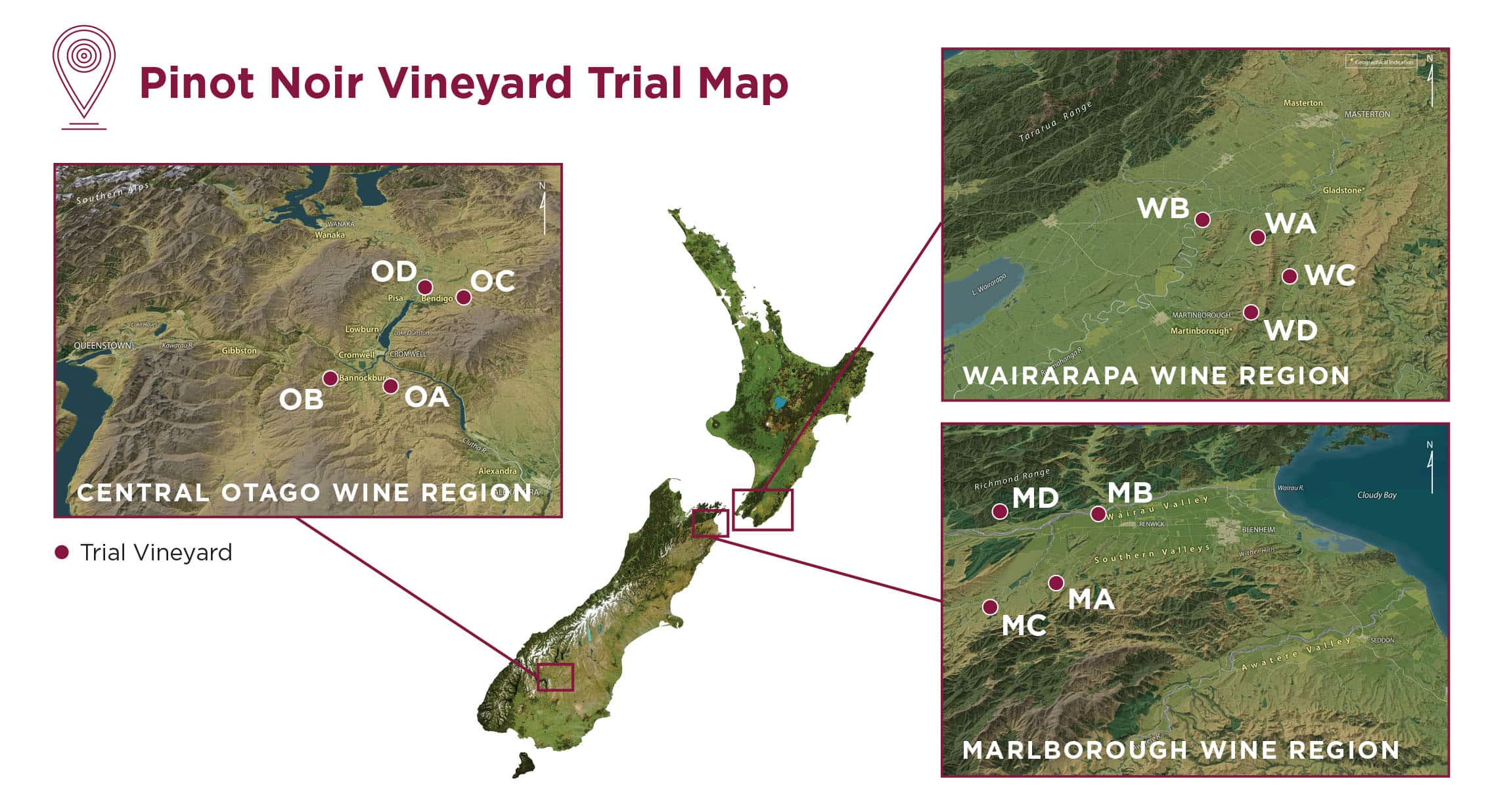
The different vineyards (12) and seasons (5) provide the replication for this trial. The design also allows scope to look at regional effects, although this is not the main goal. Our goal is to identify and understand if/how yield affects grape and wine composition predictably and consistently at every location, under a range of vineyard management regimes, and across multiple seasons.
The 20 individually monitored vines within each vineyard are the base unit where the (uncontrolled) vine-to-vine variation is yield studied. Yield and other data can be statistically analysed at different scales (e.g. Vine < Vineyard < Region < Product < Year)
Overall management approach (i.e. biodynamic, organic, conventional)
Target product type (i.e. Icon, Affordable)
Target (block) crop load (mostly)
Timing and intensity of general vineyard operations
Irrigation and fertiliser strategies/inputs
Root volume and soil properties
Vine capacity
Long-term disease status (GTD, virus – although symptom expression could differ)
Relative topoclimate compared with adjacent vines
We can therefore eliminate the above factors as responsible for variations in performance when we compare individual vines within a vineyard or between years.
For more information about the Pinot Noir Programme and these research aims (2.5 and 2.6), please visit the members’ section of nzwine.com.