


What is soil health and why is it important?
Soil is recognised for its influential role on both grape quantity and wine quality. While some soil properties are inherent to a location (e.g., soil depth, soil mineralogy, texture), other properties are more dynamic and can change depending on management decisions. For instance, soil fertility, soil water content, and soil structure can be changed intentionally (i.e., adding compost) or unintentionally (i.e., compaction under trafficking).
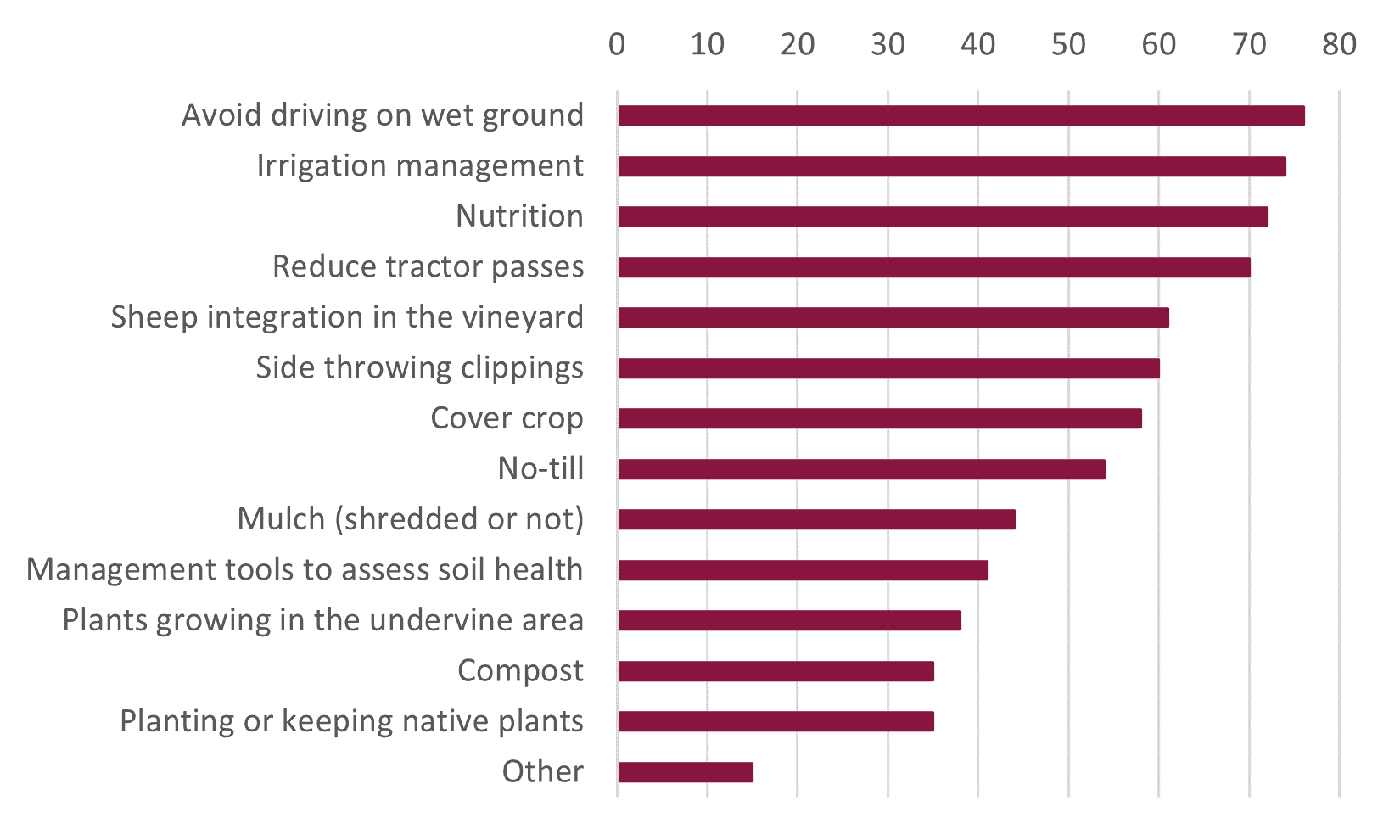
To maintain the health and function of soils, several interrelated chemical, physical and biological processes are important, and this has prompted a need to consider a wider set of soil indicators beyond more traditional measures of soil water content and fertility alone. However, currently, there is no consensus on the recommended process for measuring soil health, including the most appropriate indicators to use. Furthermore, there is a lack of clarity about what are soil health building practices and the relative efficacy of one practice over another. Bragato Research Institute (BRI) conducted a survey approach to identify practices that are being used by growers across New Zealand to build soil health so we can begin tackling these challenges.