



Following Marlborough's exceptionally high-yielding 2025 season, many growers were asking if carrying such a large crop would compromise grapevine carbohydrate reserves and affect production in subsequent seasons.
Carbohydrate reserves are often described as the vine's energy bank account. Stored primarily as starch in the root system, these reserves support early-season shoot growth, flowering and fruit development before the canopy becomes fully photosynthetically active. While controlled research trials have shown that carbohydrate reserves can influence flowering and fruitfulness, it has been difficult to determine their practical importance under commercial vineyard conditions where many management and environmental factors interact.
To help answer these questions, Dr Stewart Field from Nelson Marlborough Institute of Technology (NMIT), working with Marlborough Grape Growers Cooperative (MGGC), supported by Bragato Research Institute, undertook a regional survey of carbohydrate reserves across Marlborough vineyards. The project focused on two questions: do dormant vine root carbohydrate reserves influence vineyard productivity in the following season, and did the exceptionally large 2025 crop reduce root carbohydrate reserves entering the 2026 growing season?
Methodology
The project surveyed 28 MGGC Sauvignon Blanc vineyards across several Marlborough sub-regions, including Lower Wairau, Fairhall, Renwick, Rapaura, and the Awatere Valley.
During winter dormancy, root samples from each vineyard were collected, focusing on roots of a consistent diameter to ensure reliable comparisons between sites. Roots were sampled close to the vine trunk and analysed for both starch and soluble sugar concentrations. This provided a snapshot of carbohydrate reserve status before the start of the growing season.
To account for variation within vineyards, sampling was spread across different vigour zones identified using NDVI mapping tools. Multiple samples from high-, medium- and low-vigour areas were combined to create representative vineyard measurements.
The carbohydrate data were then analysed alongside vineyard production and crop monitoring records, including yield data from both the 2025 and 2026 seasons, bud numbers per hectare, inflorescence counts, berry and bunch weight measurements, and crop estimation data collected throughout the season. Statistical models were developed to determine how much of the variation in vineyard yield could be explained by carbohydrate reserves compared with these other factors.
Substantial variation in root carbohydrate reserves in Marlborough
The survey revealed substantial variation in root carbohydrate reserves across Marlborough vineyards. Dormant-season carbohydrate concentrations ranged from approximately 10% in some vineyards to more than 25% in others. This variation was greater than expected, suggesting that vineyards can enter the growing season with markedly different levels of reserves. Most of this difference was driven by starch levels rather than soluble sugars, reinforcing the importance of starch as the primary long-term storage carbohydrate in grapevines.
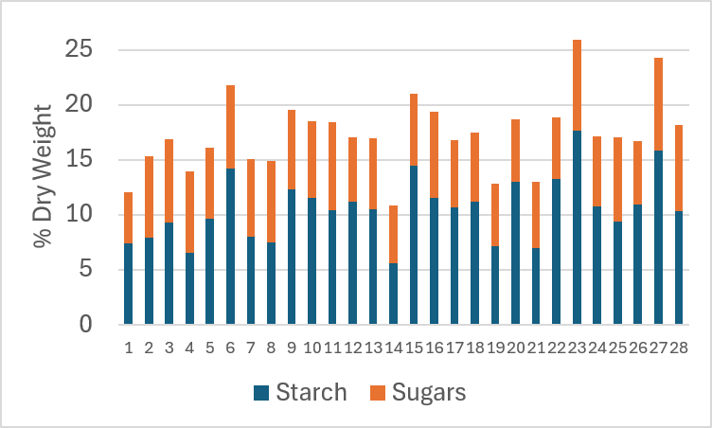
Figure 1. Total reserve carbohydrates in 28 Marlborough vineyards
The project sought to understand what might be driving these differences. One possibility was that vine vigour could influence carbohydrate storage. However, when compared, high- and low-vigour zones within the same vineyard had relatively little difference in carbohydrate concentration. Similar observations have been reported in previous Australian studies. While smaller vines likely contain fewer total carbohydrates because they have smaller root systems, the concentration of carbohydrates in the roots remained relatively consistent across vigour classes.
This finding suggests that vines tend to balance their growth and reserve use according to their size and capacity. Smaller vines generally require fewer reserves because they produce less spring growth, allowing them to maintain similar carbohydrate concentrations to larger vines. The result also indicates that factors other than vigour are likely responsible for much of the variation observed between vineyards.
Subregional differences were relatively small
Vineyards across the Lower Wairau, Fairhall, Renwick and Rapaura subregions showed similar carbohydrate concentrations, while Awatere Valley vineyards tended to have slightly lower reserve levels. Although the difference was modest, it may reflect environmental influences such as cooler temperatures, greater wind exposure or seasonal water stress. These results suggest that regional climate can influence reserve accumulation but is unlikely to be the primary explanation for the large differences observed between individual vineyards.
Rootstock was a strong influence
Certain rootstocks consistently exhibited lower carbohydrate concentrations than others, a finding that aligns with previous Australian research. This suggests rootstock selection may influence a vine's ability to acquire, store and utilise carbohydrate reserves.
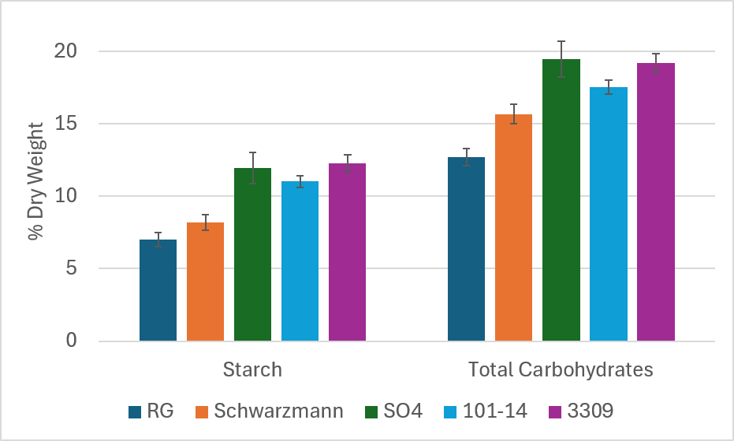
Figure 2. Carbohydrate concentration by rootstock
While additional research is needed, the findings raise questions about vineyard resilience. Rootstocks with lower reserve levels may have less capacity to buffer the effects of environmental stresses such as poor flowering conditions, water deficits or disease pressure. Conversely, rootstocks that maintain higher reserves may provide greater physiological resilience during challenging seasons. These results suggest that carbohydrate storage capacity could become another consideration when selecting rootstocks for long-term vineyard performance.
Carbohydrate reserves contribute to productivity
The project findings confirm that carbohydrate reserves contribute to vineyard productivity. Previous controlled experiments have demonstrated links between reserves and reproductive development, but proving this relationship under commercial vineyard conditions has been more difficult because of the many factors influencing yield.
The detailed vineyard dataset allowed major production variables, including bud numbers, inflorescence counts, berry numbers, and bunch weights, to be accounted for. The project created a model that used these vineyard measurements to predict yield. When carbohydrate reserves were included, the predictions became more accurate (Figure 2). This suggests that carbohydrate reserves play a supporting role in determining vineyard yield. While they are not the main driver of productivity, they provide useful additional information when predicting vineyard performance.
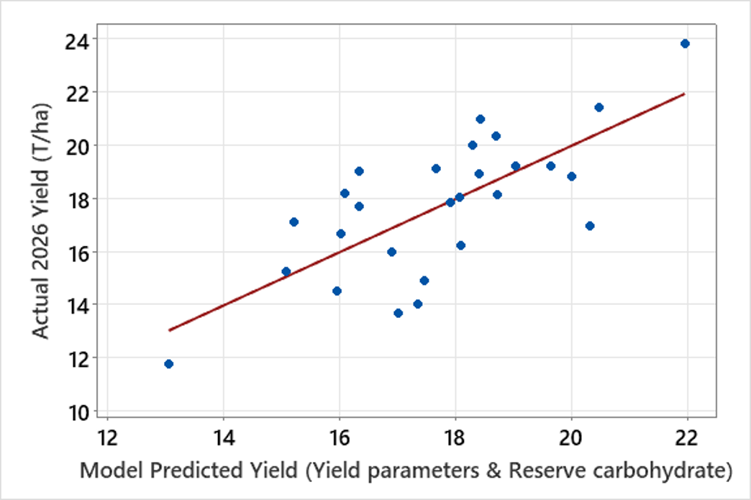
Figure 3. Comparison of actual and predicted yield using vineyard measurements and carbohydrate reserves.
The analysis suggested that every 5% increase in root starch concentration was associated with approximately one additional tonne of fruit per hectare when other production factors remained constant.
Reserve status is not the primary driver of yield, but it contributes meaningfully alongside other factors.
No relationship between previous-season yield and dormant-season carbohydrate concentration
Industry discussion following harvest suggested that the 2025 record crop may have depleted vine reserves and potentially reduced performance in 2026. However, the survey found no relationship between previous-season yield and dormant-season carbohydrate concentration. Vineyards that carried particularly large crops were no more likely to have low reserves than vineyards with more moderate yields. This finding challenges the assumption that high cropping inevitably comes at the expense of future vine performance.
The importance of the post-harvest period
International research has shown that vines can rebuild substantial carbohydrate reserves after harvest when environmental conditions are favourable and healthy leaf area is retained. The Marlborough survey appears to support this concept. A large crop does not automatically result in low reserve levels if vines have sufficient opportunity to replenish reserves before leaf fall.
Factors such as post-harvest canopy health, disease pressure, water availability, nutrition and overall vine condition may therefore have a greater influence on reserve accumulation than crop load alone. For growers, this highlights the importance of maintaining healthy functional canopies after harvest so vines can effectively rebuild reserves for the following season.
Future research
The research also raised several important questions for future investigation. If yield alone does not explain reserve status, what factors are driving the large differences between vineyards? Rootstock appears to play a role, but vineyard health, disease incidence, water status, canopy management and post-harvest conditions may also influence reserve accumulation. Understanding these relationships could ultimately provide growers with practical strategies to improve reserve status and vineyard resilience.
In summary
The project confirmed that carbohydrate reserves vary considerably between vineyards and contribute meaningfully to yield performance. While they are not the primary driver of productivity, reserves play an important supporting role alongside management decisions, vine health and seasonal growing conditions.
The exceptionally large 2025 crop did not appear to reduce reserve levels entering the following season. Instead, the findings suggest that factors such as rootstock selection, vineyard management and post-harvest growing conditions may have a greater influence on reserve accumulation than crop load itself.
For growers, the results reinforce the importance of maintaining healthy canopies and supporting vine function beyond harvest. They also highlight the potential value of understanding reserve status as part of a broader vineyard management strategy.